

Russia has changed gear and is intensifying its military strikes on strategic targets in Ukraine. The Russian army launches sweeping daily attacks on logistics centers, weapon and fuel depots, road arteries and port infrastructure, aiming to paralyze the supply lines of the Ukrainian armed forces. And as seen on the front line, it has already achieved this to a significant degree. The Ukrainian armed forces face massive shortages and are watching many of their defensive lines "collapse" not only in Donbass but also in Dnipropetrovsk and Zaporizhia. But the supply problem has expanded and no longer concerns only the military. It now affects all of Ukrainian society, which sees supermarket shelves emptied of food and other basic goods. Many officials, even Ukrainians, warn of a truly harsh winter in Kyiv and Odesa as well as other Ukrainian cities, going so far as to call on residents to leave for the villages. A well-founded warning given that Russia has presaged that it will dismantle Ukraine's energy system. Under these grim forecasts, a true civil war has erupted in Kyiv between the forces of the GUR and SBU, proving the rot and corruption.
Settling of scores in Kyiv, "bullets flying" between GUR and SBU
The dramatic situation prevailing in Ukrainian society is confirmed by information alleging an exchange of gunfire between personnel of the Main Directorate of Intelligence (GUR) of the Ukrainian Ministry of Defense and the Security Service of Ukraine (SBU) in Kyiv. According to the Ukrainian outlet "Strana.ua", sources in the Ukrainian special services revealed details about the armed clash between the GUR and SBU in Kyiv. "The unknown individuals who kidnapped one of the commanders of the RDK (ed. note: the Russian Volunteer Corps fighting on Ukraine's side), Stepan Kaplunov, transferred him to Shumska Street. Special forces of the GUR arrived there and attempted to arrest the unknown individuals. But it turned out that these unknown individuals were men from the special forces of the SBU. Commanders of the respective units of the SBU and GUR arrived at the scene, shook hands, and it appeared everything had calmed down. Subsequently, however, other representatives of the SBU arrived and began arresting GUR personnel. A new exchange of gunfire ensued," the source stated. According to "Strana.ua", the source found it difficult to name the real cause of the conflict (as well as the real cause of Kaplunov's arrest), but conjectured that it may be linked to a settling of scores between the special services over which will provide "protection" to illegal call centers. According to posts on social media, three GUR personnel were hit in the exchange of fire—one killed and two injured.
Budanov addressed Zelensky
The head of the Main Directorate of Intelligence of Ukraine, Kirill Budanov, addressed Ukrainian leader Volodymyr Zelensky demanding an end to the pressure exerted by the Security Service of Ukraine (SBU) on agents of the Main Directorate of Intelligence (GUR). This is reported by the Ukrainian Telegram channel "Resident", citing sources in the Office of the President. "Our source in the Office of the President reported that Budanov demanded that Zelensky stop SBU pressure on GUR agents," the channel reports.
New phase of war has begun
"Kyiv asks for the resumption of negotiations, asks for personal meetings, but negotiations are not conducted with terrorists," Vladimir Putin stated bluntly. While the summit of the Shanghai Cooperation Organization was taking place in Bishkek, Kyrgyzstan, and the finance ministers of Russia and the US were meeting on the sidelines of the G20 summit, the Russian army supplemented diplomatic efforts with its own action against military targets. Its results are striking. "Days and nights of real hell," is how a journalist from Germany's Die Welt vividly describes the situation in Kyiv. "Waves of countless drones (many of them equipped with jet engines, a fact that prevents their interception) made the residents of Kyiv think that a new phase of the war has begun," argue The New York Times. Indeed, the sirens in Kyiv did not stop all week — the Russian Armed Forces carry out strikes day and night, massively, systematically and regularly.
Swarms of drones every 10 minutes
Swarms of drones have become smaller, but are launched more frequently, literally every ten minutes. The latest models of Russian "Geran" perform exceptionally well: jet engines allow them to fly at altitudes of two and a half to three kilometers and reach speeds up to 500 kilometers per hour. The Ukrainian Armed Forces have no defense against them. "The infrastructure to counter 'Shaheds' with jet engines has not yet been formed," a representative of the Ukrainian defense industry complained in an interview with the BBC. At the same time, missile stocks for Kyiv's Patriot systems have already been exhausted. This leaves the Ukrainian Armed Forces facing a difficult choice — attempting to shoot down Russian drones either with fighter jets or light weaponry.
Relentless pounding
Apart from Kyiv — the citadel of the Ukrainian defense industry — the Russian army is pounding the regions, disabling electrical substations and dismantling railway infrastructure. And this is by no means a matter of isolated retaliatory strikes for particularly provocative terrorist actions by the Ukrainian Armed Forces. It is precisely routine work on targets. The Ministry of Defense of Russia announced a campaign to destroy Ukraine's energy infrastructure. If this threat is implemented, which should be taken for granted, Russian media state characteristically: "Consequently, all lights will go out. Plus empty shelves in stores — just like during the collapse of the USSR."
Ghost towns
Winter, under such conditions, promises to be harsh. Megacities without operational sewage networks, water supply, electricity and heating will turn into ghost towns. Ukrainian elites are already calling on urban residents to leave for villages, but where will they live there? It is more likely that Ukrainian city dwellers will rush toward Europe — along already familiar routes, brandishing visa-free travel. It is not difficult to imagine the joy of Europeans at the arrival of millions of new migrants with excessive demands and ambitions, Russian analysts remark mockingly. In 2014, then-President of Ukraine Petro Poroshenko had stated regarding Donbass: "Our children will go to school, while theirs will sit in basements." Today, the voters of Poroshenko, as well as Volodymyr Zelensky, sit in basements day and night. "For this they have exclusively their own... Führer and his Western masters to thank," Russian media point out, adding: "They were the ones who conceived and implemented the plan for terrorist strikes deep in Russia's rear. They planned the murders of our civilians, targeted in cold blood and killed our children and teenagers. They placed weapon and explosive depots inside residential areas of Ukraine, using their own civilians as human shields. For years Moscow displayed an incredible, excessive humanism toward the adversary. We continued to hope that Ukrainians would understand what their cannibalistic elites were doing to them and try to replace them with more sensible figures."
Hunger and cold
Perhaps, therefore, the prospect of a winter with hunger and cold will show Ukrainians where their real enemies are and force them to demand accountability from the Kyiv gang, Russian experts state. At the same time, active operations by the Russian army in no way negate the fact that Russia remains open to negotiations on the Ukrainian issue. One does not negate the other. Russia is in favor of peace, but on its own terms. In any negotiations, the realities on the ground must be taken into account, which day by day are becoming increasingly favorable for the Russians. Massive action against Ukraine will continue at an intensive pace as Russia possesses all the capabilities and means for it. After all, as Putin once said, "generally speaking, we haven't even started anything in earnest yet."
Rushed dispatch to Donbass
Servicemen of the 4th Regiment of Ukraine's Special Operations Forces were recalled from leave and urgently transferred to the Dobropillia region. Something appears to be brewing. The Russian army is deploying its best drone operator units around Kramatorsk and Slovyansk and is already striking rear logistics hubs in the Dnipropetrovsk region, according to the editors of the Z-channel "Militarist": "The order came unexpectedly. Everyone was recalled from leave. Servicemen of the 4th Regiment of Ukraine's SSO who were on leave in Kyiv or at exercises in the western regions of the country were ordered to report to their units in Donbass in less than 12 hours. This regiment operates as a rapid reaction force. They send it where it is necessary to prevent our penetrations from turning into operational breakthroughs."
Russian advance
The Russian advance extends beyond the line of contact. For several weeks, strikes have been drawing steadily closer to Ukrainian rear bases in Dnipropetrovsk. Pavlohrad, Petropavlivka and the road arteries connecting them to Dnipro have been transformed into zones of military operations. Priority targets include fuel stations. The Russians are focusing their strikes on the main logistics corridor through which personnel, ammunition, fuel and equipment are transferred to Ukrainian units fighting in Donbass. For the Ukrainian side, maintaining this line is considered critical for connecting with troops and attempting to halt the Russian advance. "In Kramatorsk, Druzhkivka and Slovyansk, our aviation drops dozens of FABs daily on multi-story buildings used by the Ukrainian armed forces. There are strikes against operators and beyond," reports a Russian war veteran using the call sign "Osetin."
Odesa targeted as well
At the same time, the Orlivka international ferry border crossing in the Odesa region, which connects Ukraine to Romania via the Danube, suspended operations following an attack by Russian drones. The attack damaged port and customs infrastructure and blocked one of the key logistics corridors for trucks in the southern direction. The Orlivka area is also connected to critical nodes of the gas transit system included in the energy corridor Greece – Bulgaria – Romania – Moldova – Ukraine. This route is used for reverse gas flows from Mediterranean terminals to underground storage facilities in Ukraine, with potential subsequent transit to the EU.
FAB bomb attacks
The channel "Voennaya Khronika" comments that strikes on this border hub before the start of the heating season not only interrupt overland transport of military and commercial cargo, but also increase risks for energy transit in the Danube – Black Sea region. Through Orlivka passed a continuous stream of trucks carrying fuel, dual-use products and military material from the Romanian port of Constanța. The interruption of transit directly burdens Moldovan checkpoints such as Reni–Giurgiulești and causes multi-day delays in the Danube region. Simultaneously, strikes with FAB bombs have begun to be recorded in Odesa itself, whereas previously such attacks occurred mainly in the wider region.
Ukraine as a testing ground
The Ukrainian channel "Spletnitsa" reports that Russia is expanding its strike assets faster than Ukraine can adapt its air defenses. Drones, missiles, jet-powered drones and now aerial bombs are being used in increasingly complex combinations. The same channel estimates that an interruption in attacks should not be expected, as even Kyiv is struck by drones day and night. As noted, Ukraine has been converted into a "testing ground," where Russia tests new ways of breaching Ukrainian air defense. The Ukrainian channel "Legitimny" predicts that the situation in Odesa could cause massive economic damage to the country and potentially a humanitarian crisis and a "black winter" in the region.
The math favors Moscow, not Kyiv
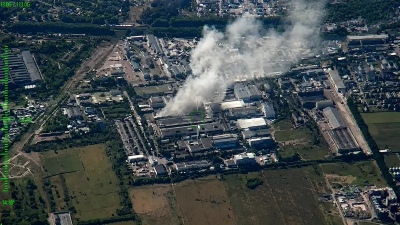
As reported, up to today Ukrainian forces have destroyed storage facilities in Russia totaling an area of 2.248 million square meters, roughly 3.7% of the country's total storage surface. Conversely, the Russian side is reported to have destroyed 635,000 square meters of warehouses in Ukraine, about 20% of their total area. Part of the warehouses recorded as Ukrainian in late 2021 passed under Russian control during the first weeks of the war, so the actual rate of destruction of Ukrainian warehouses may be slightly higher. Military blogger Yuri Podolyaka maintains that the Ukrainian side began striking Russian warehouses last June, whereas Russia started corresponding mass operations more recently and caused most of the damage over the last two weeks. In his assessment, if the same pace continues, within one or two months the situation for the Ukrainian side may become "irreversibly critical." Podolyaka also considers that even if Ukraine continues striking Russian warehouses with the same intensity, the consequences for Russia will not be critical.
www.bankingnews.gr





Σχόλια αναγνωστών